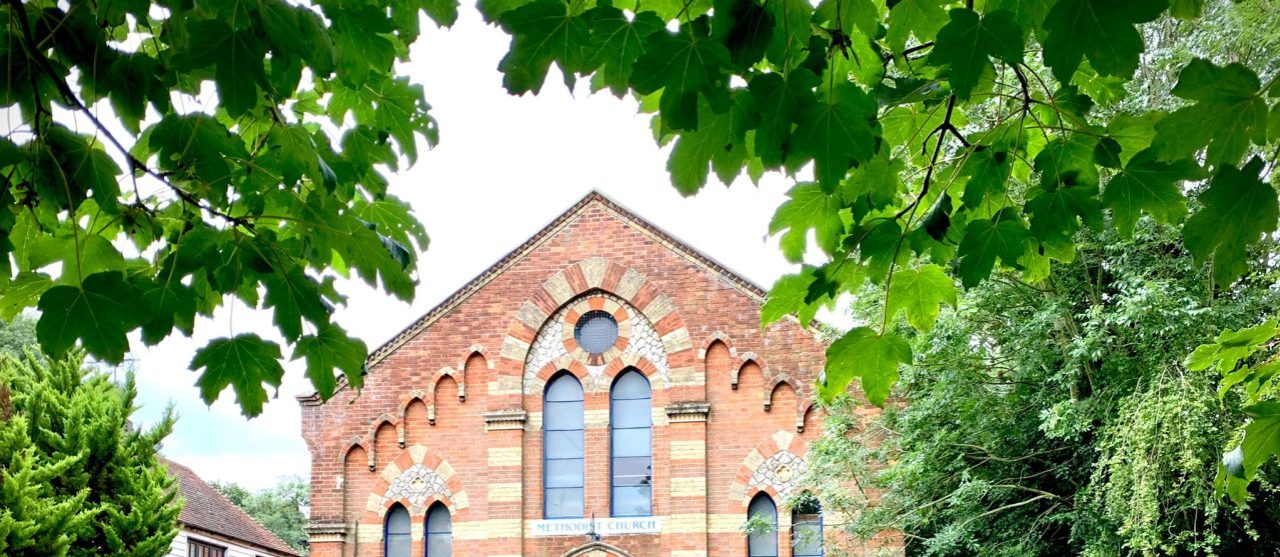
The first Chapel on the site was built in 1805, followed by another in 1854. The current building was completed in 1867. The construction of the Chapel was not easy, with the Methodists facing several financial challenges, as well as planning objections! According to the booklet Headcorn Methodist Church, Centenary Celebrations 1867-1967 Souvenir Handbook: “The total cost for the new Church and fittings was £815 13s. 8d. This money was raised entirely by local effort”.

From 1867 it was a popular community hub, as well as a Church. The building had a special ‘schoolroom’ at the back, where many of the poorest children in the village learnt to read and write, with the help of dedicated teachers like Elizabeth Hall, grandmother of Veronica Tassell. Villagers like Tim Thomas still remember going on trips to Dymchurch which were organised by the Methodist Church, for children who would never otherwise get the opportunity to visit the seaside.
The Heart of Headcorn Community Project was set up to preserve the local Methodist Church for the Community which it has served for generations.

Many of our members and supporters have an important historical connection with the building. Here are just a few examples. Tim Thomas, our Chairman, was Christened there and his parents were married there. His happiest memories include seaside trips and choir sessions organised by the Church. Our local butcher, Thelma Hollamby, was married at the Church, as was the former custodian, Ron Haggerty. The Foreman family, the Tassell family, the Boormans, the Shersbys, the Brandleys and the Wildings all still have descendants and family connections in the village.

Architecture and Interior
The Headcorn Methodist Chapel, built in 1867, is the third Wesleyan Place of Worship to be built on this site, following the traditional pattern of House-Chapel-Chapel. Although its shape and layout are typical of Methodist Chapels of this period, its rare architectural features and unique setting cannot be found in any other Methodist Chapel in Kent.
Its listing has been categorised as ‘Essential’ in a recent Maidstone Borough Council Report ‘Conservation Area Appraisal and Management Plan for the Headcorn Conservation Area’, in which the Chapel is described as: “This fine building – brick built and symmetrical in form – sits well back from the road but makes a splendid end stop to the High Street. NDHA Essential”. The Plan defines ‘Essential’ as: ‘buildings/sites which, because of their high architectural or historic interest or townscape function must be retained’. The Chapel has also been the subject of several artworks and a folk song.
The Headcorn Methodist Church is an iconic building that greets visitors head-on as they enter the village from the Maidstone Road. It is within the green spaces of the western end of Headcorn’s Conservation Area and in sight of many Grade I, Grade II and Grade II* listed properties, including the Grade I listed Parish Church of St Peter and St Paul and the famous Grade II* listed Cloth Hall. It is also within seconds of the Grade II* listed medieval hall house known as Headcorn Manor; the Grade II Elizabethan Shakespeare House (originally a cloth factory) and the Grade II Tudor building ‘Chequers’.

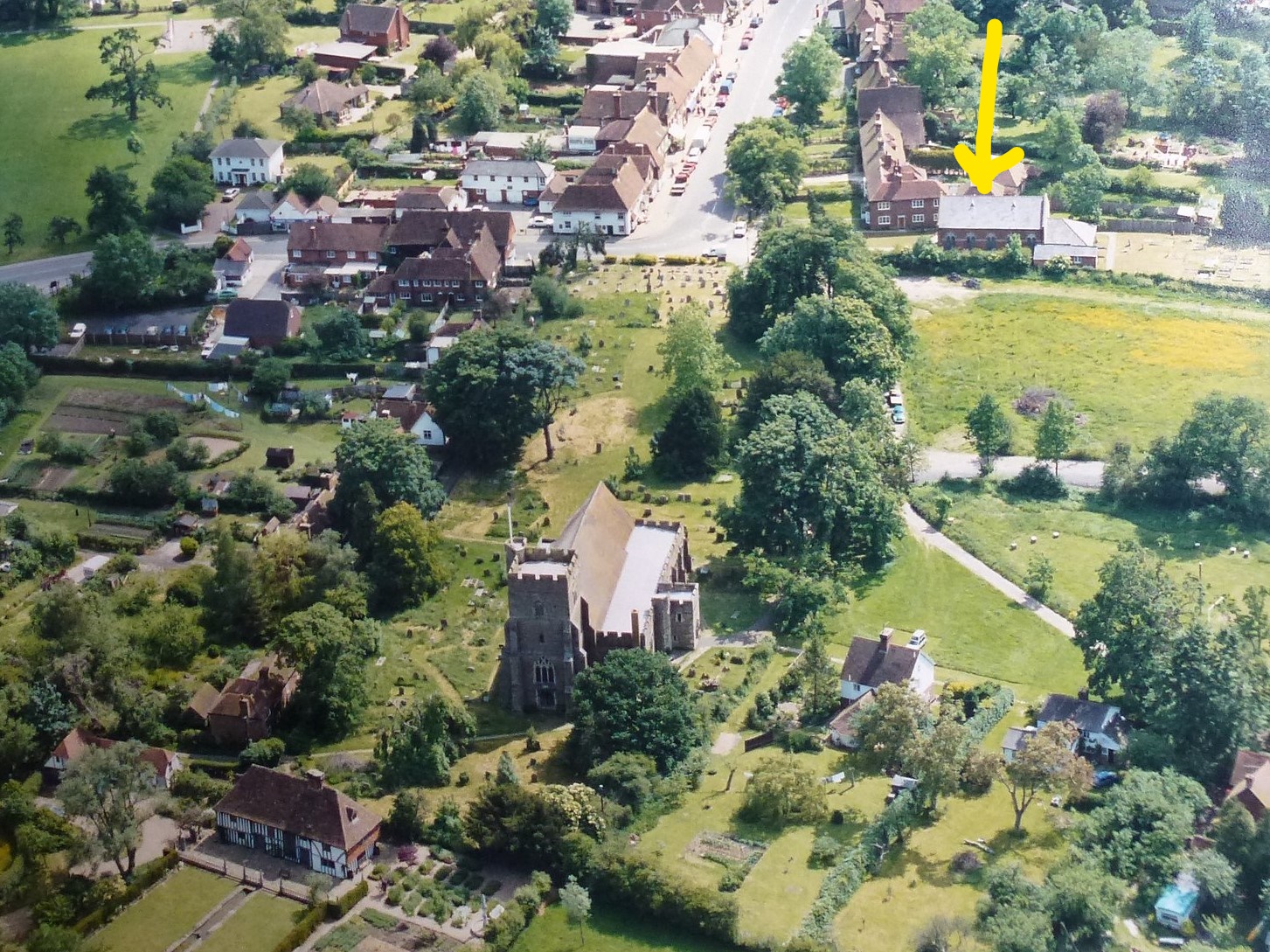
The Church has graveyards at the front and at the rear, with a public right of way along the side path, linking both graveyards. The front graveyard is owned by the Methodist Church, with a 999-year lease and tended by Heart of Headcorn volunteers. The rear graveyard is owned by Headcorn Parish Council and this graveyard is still used as a community burial ground. There are many old graves, including the famous grave of Kelsham Fullager, which directly abut the front and back walls of the Church.
Details of the Building


The Headcorn Methodist Church, like many Wesleyan chapels in the area, is built of red Wealden bricks. However, in the front elevation and on both sides, the courses of red brick have been interspersed with courses of brick in a lighter colour, to create a distinctive, contrasting pattern. This special brickwork cannot be found in any other Methodist Church in Kent. In conjunction with a framed oculus (round window); a scalloped cornice on each of the four neo-Classical pilasters and the loose stone set around each quatrefoil (resembling an asymmetrical mosaic), this marks out the Headcorn Methodist Church as one of the rare examples of the Byzantine Revival style of architecture in England, popularised by John Ruskin and, later, William Morris. It is famously exemplified by Westminster Cathedral; Keble College Chapel, Oxford; the Greek Orthodox Church in Liverpool and the Fitzroy Memorial Library Lewes (designed by Sir George Gilbert Scott), all of which share significant features with Headcorn Methodist Church. The façade also shares features with medieval churches in Tuscany, Italy.

The influence of the mid-nineteenth century gothic revival can be seen in the long, narrow windows: four pairs on each of the side elevations and three large pairs in the front, with the architect perhaps mindful of the recommendations of the Reverend FJ Jobson (Chapel and School Architecture, 1850) who believed the gothic to be essential to religious buildings ‘as pointing heavenwards’. The heavy wooden front door is also gothic in design. However, consistent with the Byzantine theme, the window arches are parabolic rather than lancet. Gothic quatrefoils (representing the Four Gospels) lie above each pair of windows but the exception is the pair of windows above the main door, where the quatrefoil is replaced by the Eastern-style oculus.

Some other unusual features of the front façade are the ornamental brick arches in relief rising below the roof line, five arches on each side, and meeting the central double-window. This exotic addition may have also been intended to give an extra layer of protection to the roof area.
Around the gothic doorway there is an interesting effect whereby the arch appears to be multiplied, intended to signify that the churchgoer was entering eternity. It has also been described as representing rays of light, especially when coupled with this brick pattern, as emanating from Jesus as the Light of the World.
Interior of Headcorn Methodist Church
The front door of the Church opens into a small narthex/vestibule, with wooden staircases on either side leading to a Minstrel gallery. Although currently undergoing renovation works, this is a solid structure which once housed a full choir.
Below the gallery are two small rooms, a Steward’s Room and a Vestry. The Vestibule contains a wooden plaque giving thanks for the preservation of the building during the war.


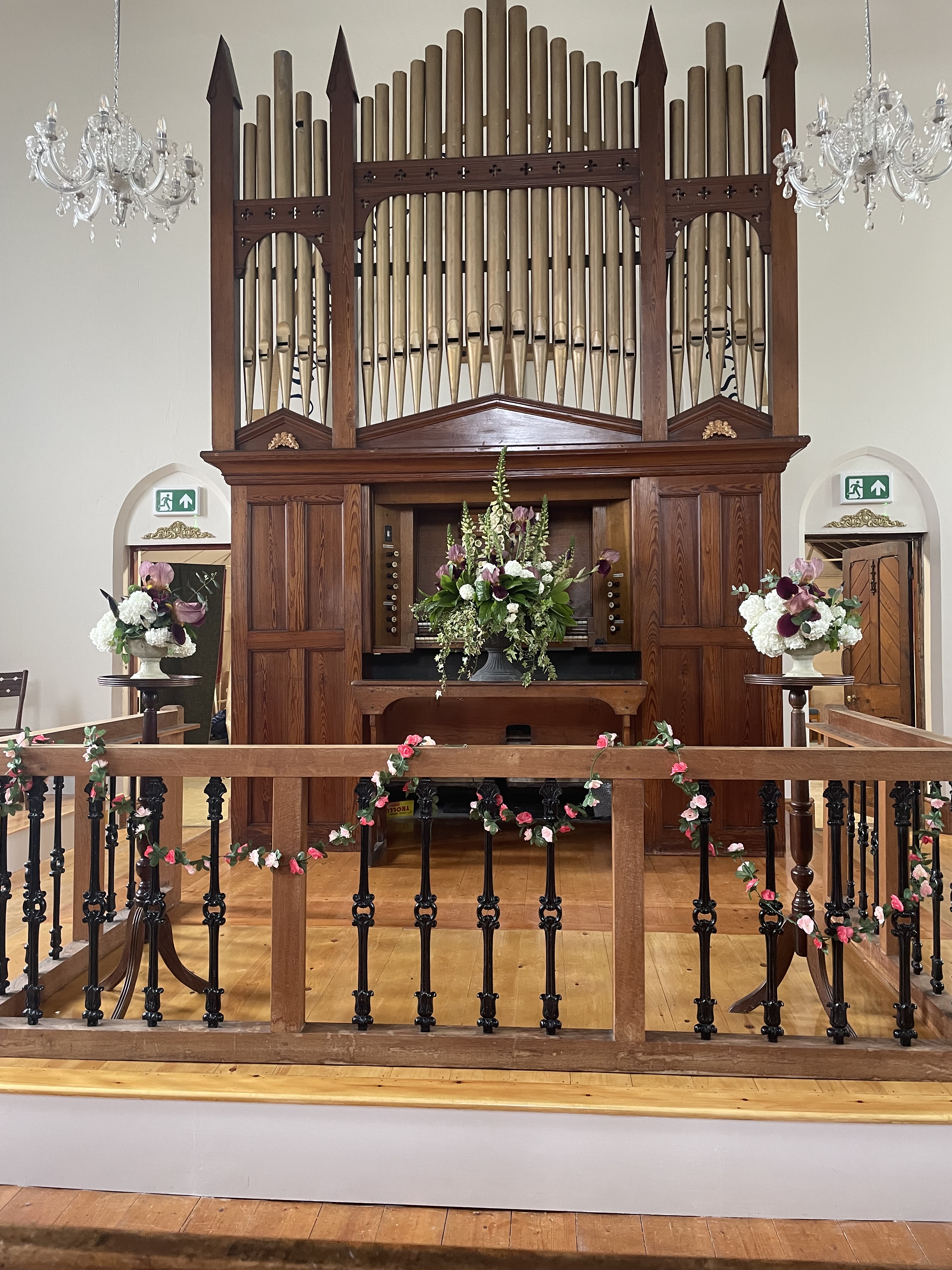
The Church had a raised, carpeted rostrum with a chancel, surrounded by a wooden and metal communion rail, in front of an alcove with painted wording around the top. Much of this has been preserved as a main stage. There was originally a 1912 Carnegie organ in the left hand corner, 50% of which was paid for by villagers, with the other 50% paid for by Carnegie. This was removed and re-homed by the MC custodians who were concerned that it might be destroyed if the property were to go to auction. Happily, the Heart of Headcorn has sourced a very similar organ down from Durham, which is of a similar age, type and size. The installation of this is almost completed.


The ceiling, which was refurbished in 2017 at considerable cost, has beams going across it with quatrefoil designs within.
The War Memorial inside is made of grey sandstone and marble. It bears the inscription ‘Live thou for freedom / We for freedom died’.

There is also another memorial in the back of the Church to a small child (from the ‘Children’ family) who died at the age of 4.
 Heart of Headcorn